Quick safety note: retatrutide is still investigational. As of July 2026 it is not approved by the FDA, so any "retatrutide" for sale online is not coming through a regulated pharmacy. Treat that supply as unknown, not as a cheaper version of a prescription.
If you're on Zepbound and you keep seeing retatrutide pop up in your feed, you're not imagining it. The trial numbers are genuinely eye-catching. But retatrutide isn't approved yet, and that one fact changes everything about what's actually possible today, and what's just noise.
This is written for normal people, not researchers. I'll walk through what retatrutide is, how it stacks up against Zepbound, what the side effects look like, why the online "research" market is such a trap, what Zepbound really costs in the US right now, and how to keep clean records in Healthcount so your progress is something you can actually trust.
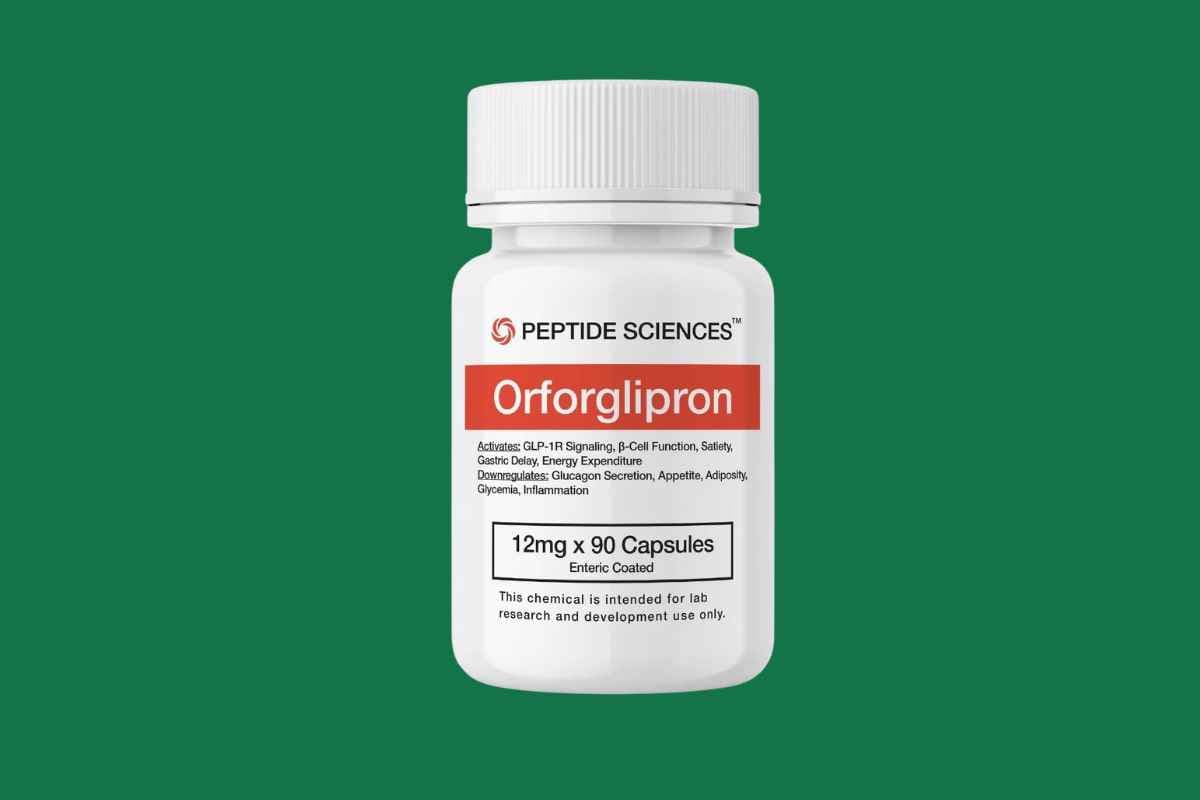
Don't mix these up. Retatrutide is not Foundayo, and it is not the Wegovy pill. Foundayo is orforglipron, an approved once-daily oral GLP-1 pill. The Wegovy pill is oral semaglutide. Retatrutide is a separate, unapproved once-weekly injection. Easy to conflate, very different in what you can get today.
Quick facts (30 seconds)
| Question | Quick answer |
|---|---|
| Is retatrutide FDA approved? | No. It's still in Phase 3 trials and hasn't been submitted to the FDA. |
| What is retatrutide? | A once-weekly injection that targets three receptors (a "triple agonist"). |
| What is Zepbound? | An FDA-approved once-weekly tirzepatide injection that targets two receptors (a "dual agonist"). |
| Can you convert Zepbound mg to retatrutide mg? | No official conversion exists. You can only compare trial averages, roughly, not "equivalent doses". |
| What's the biggest risk right now? | Buying unapproved "research" retatrutide online. You can't verify what's in it. |
Thinking about a switch, or just weighing your options? The most useful thing you can do today is keep clean records.
Healthcount tracks weight, food, measurements, progress photos, and your weekly dosing, all in one place.
Start tracking freeWhat retatrutide is
Retatrutide is an investigational (not-approved-yet) medicine that Eli Lilly is testing for obesity and a long list of related conditions. It's a once-weekly injection.
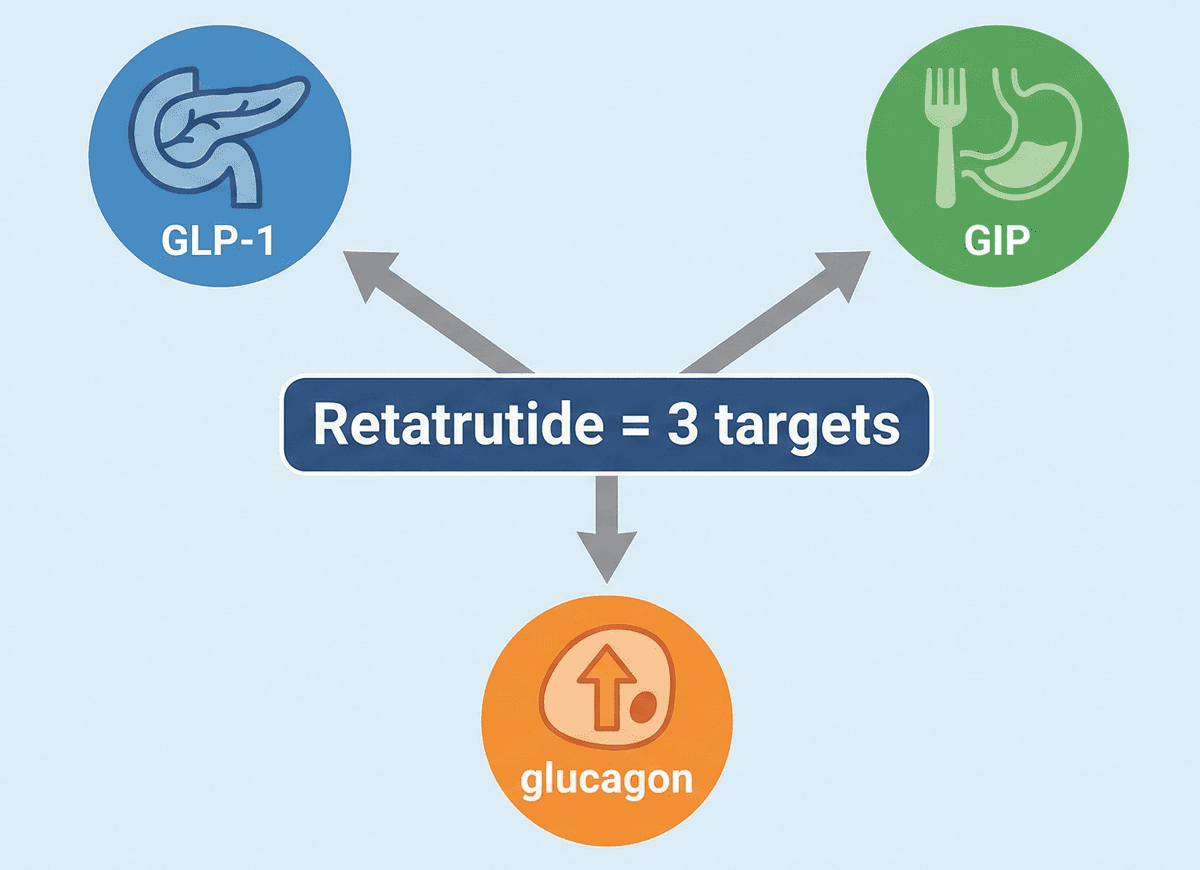
It's usually called a triple agonist because it switches on three receptors at once:
- GLP-1 receptor
- GIP receptor
- Glucagon receptor
That third target, glucagon, is the piece Zepbound doesn't have. In theory it nudges the body to burn a bit more energy on top of the appetite effects. The early data has been strong enough that people talk about it like it's already here. It isn't.
What Zepbound is
Zepbound is the US brand name for tirzepatide when it's prescribed for weight management. It's a once-weekly injection, and the FDA approved it for chronic weight management in November 2023, then added obstructive sleep apnea in adults with obesity in December 2024.
One quick note that trips people up: in the US, tirzepatide for weight loss is Zepbound. Mounjaro is the same molecule, but it's the diabetes brand here. (In the UK, confusingly, Mounjaro is the brand for both uses.) So if you've read a UK guide about "Mounjaro for weight loss", that's Zepbound in US terms.
Zepbound is a dual agonist, which means it works on two receptors:
- GLP-1 receptor
- GIP receptor
Dosing starts low and climbs slowly: 2.5 mg once weekly to begin, then 5 mg, then stepping up in 2.5 mg increments up to 15 mg, with at least four weeks at each step. The starter 2.5 mg dose isn't really a "treatment" dose, it's there to help your gut settle in.
The receptor difference (triple vs dual)
You don't need a biology degree here. You just need the right picture.
What's a receptor?
Think of a receptor as a doorbell on a cell. When the right "finger" presses it, whether that's a natural hormone or a medicine, the cell gets a message and reacts.
What's a hormone?
A hormone is a message chemical your body makes. It rides around in your bloodstream to reach the cells it's meant to talk to.
Why does this matter for weight and blood sugar?
Because drugs like Zepbound and retatrutide are basically messages you inject. They're built to press certain doorbells that change:
- hunger and fullness
- how your body handles sugar after meals
- and, with the glucagon target, possibly how much energy you burn
If you've ever wondered why these meds can flatten your appetite so hard, that's the reason.
Retatrutide vs Zepbound: the big difference
Here's the headline in one line:
- Zepbound = dual agonist (2 targets)
- Retatrutide = triple agonist (3 targets)
So retatrutide has an extra lever, the glucagon receptor, on top of the GLP-1 and GIP effects that Zepbound already uses.
You can't compare them by milligrams
This is the part that saves you a lot of confusion:
- 1 mg of one drug is not automatically "stronger" or "weaker" than 1 mg of another.
- They're different molecules hitting different receptors, with different potencies and different dose-response curves.
- So there is no official Zepbound-to-retatrutide conversion chart, and there won't be one until retatrutide is approved and studied head to head.
- What you can do is compare trial averages at set timepoints, with a big "rough comparison only" label on it.
"What retatrutide dose equals my Zepbound dose?"
Let me answer this the way people actually ask it.
The honest answer
There is no evidence-based, safe, "same result" conversion from Zepbound mg to retatrutide mg. That's partly because they're different drugs, and partly because retatrutide isn't approved, so nobody's dosing it outside a trial.
What we can do is line up published trial results and see what lands in a similar range, on average, not person to person.
A rough comparison table (trial averages, not a dosing guide)
This is not a conversion chart. Different trials, different lengths, different people. It's only here to show why "mg" doesn't translate cleanly between two different drugs.
| Medicine | Dose group | Timepoint | Average weight change |
|---|---|---|---|
| Zepbound (tirzepatide) | 5 mg weekly | 72 weeks (SURMOUNT-1) | -15.0% |
| Zepbound (tirzepatide) | 10 mg weekly | 72 weeks (SURMOUNT-1) | -19.5% |
| Zepbound (tirzepatide) | 15 mg weekly | 72 weeks (SURMOUNT-1) | -20.9% |
| Retatrutide (investigational) | 4 mg weekly | 80 weeks (TRIUMPH-1) | -19.0% |
| Retatrutide (investigational) | 9 mg weekly | 80 weeks (TRIUMPH-1) | -25.9% |
| Retatrutide (investigational) | 12 mg weekly | 80 weeks (TRIUMPH-1) | -28.3% |
How to read this:
- The two trials ran to different lengths (72 weeks for Zepbound, 80 weeks for retatrutide) and enrolled different people, so this is a rough side by side, not a scoreboard.
- Retatrutide's top dose landed higher on average, and about 45% of people on 12 mg lost at least 30% of their body weight over 80 weeks, a level people usually associate with surgery.
- Even so, "higher average" in a trial doesn't tell you how any one person will respond, or how well they'll tolerate it.
Will you have to titrate again if you switch?
Almost certainly, yes.
Why? The slow step-up is the whole reason these drugs are tolerable. It's how they keep nausea and vomiting down while your gut adjusts.
- Zepbound's prescribing info builds in 2.5 mg step-ups with at least four weeks between them.
- Retatrutide's trials used their own gradual dose escalation, and lower starting doses helped with side effects.
Bottom line: even if you've spent months getting comfortable on Zepbound, a brand-new drug would almost certainly mean starting a fresh titration schedule, if and when it's approved. Tolerability doesn't carry over.
What retatrutide is being studied for
Retatrutide isn't only being tested for weight loss. Lilly's Phase 3 TRIUMPH program covers a spread of conditions tied to obesity and its complications.
| Category | Examples in the Phase 3 program |
|---|---|
| Weight management | Obesity, overweight with weight-related conditions |
| Metabolic health | Type 2 diabetes |
| Pain and mobility | Knee osteoarthritis |
| Sleep and breathing | Obstructive sleep apnea |
| Heart and kidneys | Cardiovascular and kidney outcomes |
| Liver | Metabolic dysfunction-associated steatotic liver disease (MASLD) |
Where retatrutide stands with the FDA
Can I get it in the US right now?
No, not as a prescription. The only legitimate way to take retatrutide today is inside a clinical trial.
What's the latest?
In May 2026, Lilly reported topline results from TRIUMPH-1, the big pivotal obesity trial. Across roughly 2,300 adults with obesity or overweight (and at least one weight-related condition, but no diabetes), average weight loss at 80 weeks came in around 19.0% at 4 mg, 25.9% at 9 mg, and 28.3% at 12 mg. Lilly said this data will anchor its regulatory filings.
The word "topline" matters. It's an early press summary, not the full peer-reviewed dataset that regulators and doctors eventually pick apart.
So when might it actually be approved?
As of July 2026, retatrutide has not been submitted to the FDA. A filing is widely expected around late 2026 or early 2027. Even in a fast scenario, that puts a possible US approval no earlier than 2027, and drug timelines slip all the time.
The takeaway: retatrutide is moving fast, but "fast" still means it's a next-year-or-later question, not a this-week one.
Side effects worth watching
Most of what people report with these drugs is, honestly, stomach stuff. That's not a sign the drug is "bad", it's because these hormone pathways run right through your appetite and digestion.
What shows up in retatrutide trials
The most common side effects have been gastrointestinal and dose-related, mostly mild to moderate: nausea, diarrhea, constipation, vomiting, and lower appetite. They tend to be loudest during dose increases and settle as your body adjusts.
One that gets people asking questions
Retatrutide trials have also noted dysesthesia, which is odd skin sensations like tingling or a hypersensitive feeling, especially at higher doses. In the reporting it's usually described as mild and rarely a reason people quit, but it's worth knowing about so it doesn't blindside you.
| Type | Examples | What to do with it |
|---|---|---|
| GI (most common) | nausea, diarrhea, constipation, vomiting, lower appetite | Expect it most during dose increases. Tell your prescriber if it's persistent or severe. |
| Sensory / nerve-type | dysesthesia (tingling, hypersensitive skin) | Don't ignore new or worsening symptoms. Get medical advice. |
| General | feeling very full, eating much less | Track it so you can spot when appetite loss is tipping into too little food. |
The "research use only" problem
What are people actually buying?
Because retatrutide isn't approved, there's no real pharmacy supply of it. What you'll find online instead is vials labeled "research use only" or "not for human consumption", sold by sellers who are, on paper, not selling you a medicine at all.
Why that's a bigger deal than it sounds
The FDA hasn't reviewed any of it. And the era of cheap compounded copies is closing fast: the tirzepatide and semaglutide shortages were declared resolved, large-scale compounding of copies became unlawful, and in 2026 the FDA moved to keep these drugs off the bulk-compounding list for good. So the "gray" supply for approved drugs is shrinking, and retatrutide was never in a legitimate supply chain to begin with.
If it isn't coming from a real clinic or pharmacy, you can't reliably know:
- what's actually in the vial,
- how strong it is,
- whether it was stored and shipped correctly,
- or whether it's sterile.
For anything you inject weekly, that's a lot of unknowns to hand-wave past.
What Zepbound actually costs in the US
Here's the practical difference between the two drugs: Zepbound is something you can actually get, at a price that's come down a lot. Retatrutide is a maybe-later. So if you're comparing them for real life, the honest comparison is Zepbound today versus waiting.
Prices below are as of July 2026 and have changed more than once in the past year. Check the current numbers at lilly.com before you plan around them.
| How you're paying | Rough monthly cost | Notes |
|---|---|---|
| List price | ~$1,086 | The sticker number almost nobody pays out of pocket. |
| LillyDirect self-pay | $299 to $449 | $299 (2.5 mg), $399 (5 mg), $449 (7.5 to 15 mg) if you refill inside a 45-day window. Vials or KwikPen. |
| Commercial insurance + savings card | As low as $25 | Only if your plan covers Zepbound. Savings cards legally exclude Medicare, Medicaid, and other government plans. |
| Medicare GLP-1 Bridge (Part D) | $50 copay | Zepbound KwikPen for eligible Part D enrollees, running July 1, 2026 through Dec 31, 2027. |
Vials vs pens, quickly
US Zepbound self-pay usually comes as single-dose vials that you draw up with a supplied syringe, and a one-month supply is four of them. There's also the KwikPen, a multi-dose auto-injector, and single-dose pens. If you started on a pen and later moved to vials to hit the self-pay price, the dose is the same, the delivery is just different. Worth logging which format you're on so your records line up.
A note on insurance words
If you're going through insurance, you'll run into prior authorization, step therapy, formularies, and copays. None of that is exciting, but it's the difference between $25 and $500 a month, so it's worth the phone call to your plan before you assume you're stuck at list price.
What to track in Healthcount
If you do one thing after reading this, do this: track the basics, consistently.
Not to obsess over it. Because memory lies. Mine does too. Six weeks from now you will not accurately remember when a side effect started or which week the scale actually moved.
Here's a routine that fits a real life, not a spreadsheet fantasy.
| What to track | How often | Why it helps |
|---|---|---|
| Weight | Daily, then read the weekly average | Daily weight bounces around with water and sleep. The weekly average is the real trend. |
| Measurements (waist, hips) | Monthly | The tape moves slower than the scale, but it's great for long-term progress. |
| Progress photos | Weekly or monthly | Weekly if you like detail, monthly if you want less pressure. Consistency beats perfection. |
| Food | Daily, rough is fine | Helps you catch the days appetite loss tips into eating too little. No calorie math required. |
| Dosing | Every dose | Log the dose, the date, and the format (vial or pen). If something changes, you can line it up with the timeline. |
If you're already putting in the effort, you may as well see it clearly
Use Healthcount to build a week-by-week story you can actually trust, whether you stay on Zepbound or wait to see what's next.
Start trackingFAQs
Can I get retatrutide in the US right now?
Not through a pharmacy. It's still investigational, so the only legitimate route is a clinical trial. Anything sold online as retatrutide is unapproved, and the FDA hasn't reviewed it.
Is retatrutide "better" than Zepbound?
In trials, the top retatrutide dose showed higher average weight loss. But "better" isn't just a bigger number. It depends on tolerability, long-term safety, and what you personally need, and retatrutide still has to clear the FDA and pile up real-world safety data. Zepbound has years of that behind it.
If I'm doing well on Zepbound, should I chase what's next?
Not automatically. If you're losing weight, feeling okay, and your health markers are improving, that's already the win. Newer isn't always better for you. Sometimes it's just newer.
Is retatrutide the same thing as Foundayo or the Wegovy pill?
No, and this one's worth repeating. Foundayo is orforglipron, an approved once-daily GLP-1 pill. The Wegovy pill is oral semaglutide, also approved. Retatrutide is a separate, unapproved once-weekly injection. Same weight-loss conversation, very different products.
Do I have to titrate again if I switch medicines?
Almost certainly. Both Zepbound's prescribing info and retatrutide's trial design are built around starting low and stepping up to keep side effects manageable. Time on one drug doesn't buy you tolerance on another.
Sources
- Eli Lilly: retatrutide TRIUMPH-1 Phase 3 topline results (May 2026)
- AJMC: retatrutide TRIUMPH-1 weight-loss results by dose
- NEJM: Retatrutide Phase 2 obesity trial (dosing and side-effect data)
- FDA: approval of Zepbound (tirzepatide) for chronic weight management
- NEJM: SURMOUNT-1 tirzepatide obesity trial (72-week weight-loss results)
- LillyDirect: Zepbound self-pay pricing and full terms
- KFF: the Medicare GLP-1 Bridge and BALANCE model explained
- Drugs.com: Foundayo (orforglipron) approval history, for disambiguation